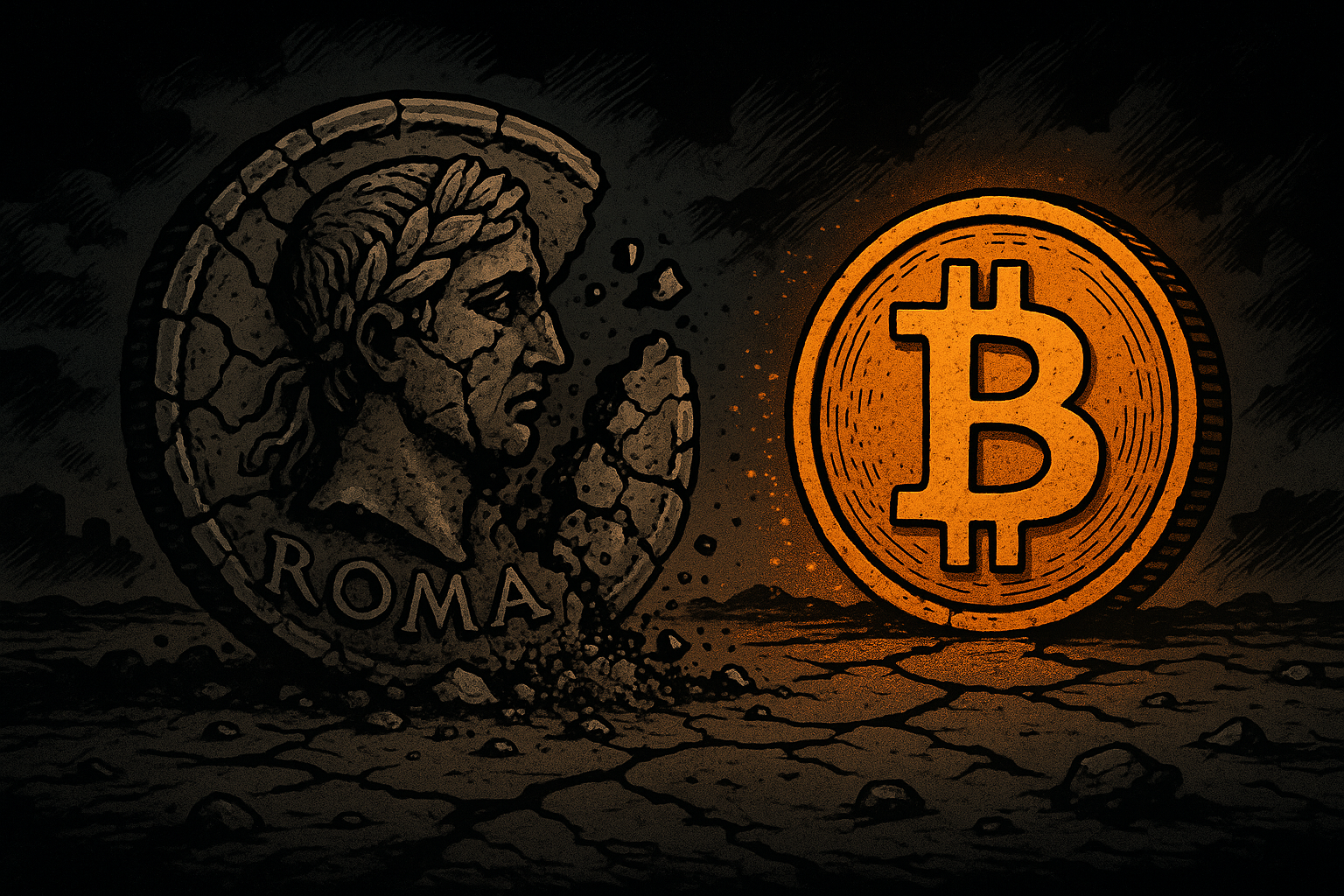
From Rome to Fiat: How Broken Money Destroys Empires
Rome didn’t collapse in one day. It took centuries. But the cracks showed up in its money first.
The Roman denarius started as solid silver. When it was introduced around 211 BCE, it was over 95% pure silver. People trusted it. Soldiers accepted it. Trade flowed because the money was real.
Then came the empire’s appetite. Wars, palaces, handouts to the people, and bribes to the army. Rome always wanted more than it could afford. So emperors did the same thing governments do today: they debased the money.
Nero clipped coins down to 90% silver. Caracalla introduced the antoninianus, worth “two denarii” but only containing 1.5 in silver. By the 3rd century, the coins were under 5% silver, basically bronze coated with a thin wash. By then, nobody trusted Roman money.
What happened next was predictable:
Prices exploded. A loaf of bread or sack of grain cost hundreds of times more than before.
People hoarded old coins. Gresham’s Law kicked in—bad money drove out good. The fake coins circulated, the real ones disappeared.
The military turned. Soldiers wanted land, food, or payment in kind, not worthless coins. Loyalty to the empire faded.
Taxes collapsed. Citizens dodged or paid in kind. The state couldn’t fund itself.
Trade broke apart. Barter returned. Local economies stopped trusting central money.
Rome didn’t just lose battles. It lost trust. Once the money failed, everything else crumbled.
---
The Same Cracks Are Showing Now
Look around. Fiat is today’s denarius.
Inflation. U.S. inflation hit 9.1% in June 2022—a forty-year high. Your dollars buy less every year.
Money supply. M2 exploded after 2020. The Fed printed trillions to paper over crises. More units chasing the same goods—it’s silent theft.
Debasement 2.0. Modern money isn’t clipped coins—it’s digital entries conjured out of thin air. Same effect, faster scale.
Loss of trust. People run to hard assets—real estate, gold, Bitcoin—because fiat bleeds value. Just like Romans hoarded old silver coins.
Cracks in control. Canada froze bank accounts in 2022 for political dissent. Nigeria rationed withdrawals in 2023. Lebanon locked depositors out entirely. Sound familiar? Rome did the same thing when its coins failed—it rationed, confiscated, and controlled.
Our system is showing stress fractures. Rising debt, runaway spending, weaponized money, and a currency that loses power every year. Rome’s story is playing out again—only this time it’s global.
---
The Difference: Bitcoin
Rome’s flaw was simple: emperors could change the rules. They always did. Our flaw is the same: central banks and governments can create as much money as they want. They always do.
Bitcoin is built different.
Fixed supply. 21 million. No emperor, no president, no bank can change it.
Transparent rules. Everyone can verify issuance by running a node. No secret debasement.
Borderless. It isn’t tied to an empire. It belongs to no one and everyone.
Unstoppable. Transactions can’t be censored. Wealth can’t be frozen if you hold your keys.
Rome fell when its money failed. Our fiat system will crack the same way. Bitcoin is the exit door.
---
Lessons from Rome
1. Debasement is theft. Rome stretched its coins thinner until they were worthless. Today, fiat stretches your dollars thinner with every stimulus, bailout, and war budget.
2. Once trust is gone, it doesn’t return. Romans went back to barter because they stopped believing in the coin. Today, people hedge with Bitcoin because they don’t believe in central banks.
3. The empire always spends too much. Rome couldn’t cut its appetite. Neither can Washington, Brussels, or Tokyo. Debt spirals always end the same way.
4. Money is the foundation. Armies, governments, and trade all rest on it. Break the money and everything else cracks.
---
Where We Are Now
We’re not watching history—we’re reliving it. Fiat is our denarius. Endless debt, debasement, and control are our cracks. Rome ignored the warning signs until it collapsed. Most people today are ignoring the same ones.
But the difference is we have Bitcoin. A monetary system no emperor can touch. A currency no state can debase. A store of value no inflation can quietly bleed.
Rome had no escape. We do.
---
Bottom Line
Rome fell because its money broke. Our system is breaking for the same reasons: too much spending, too much debt, too much manipulation. The difference is this time there’s an alternative.
That alternative is Bitcoin. It’s sound money for a world built on lies. It’s the ticket out of empire collapse.
Rome didn’t have a choice. We do.
And I know which side I’m stacking on.