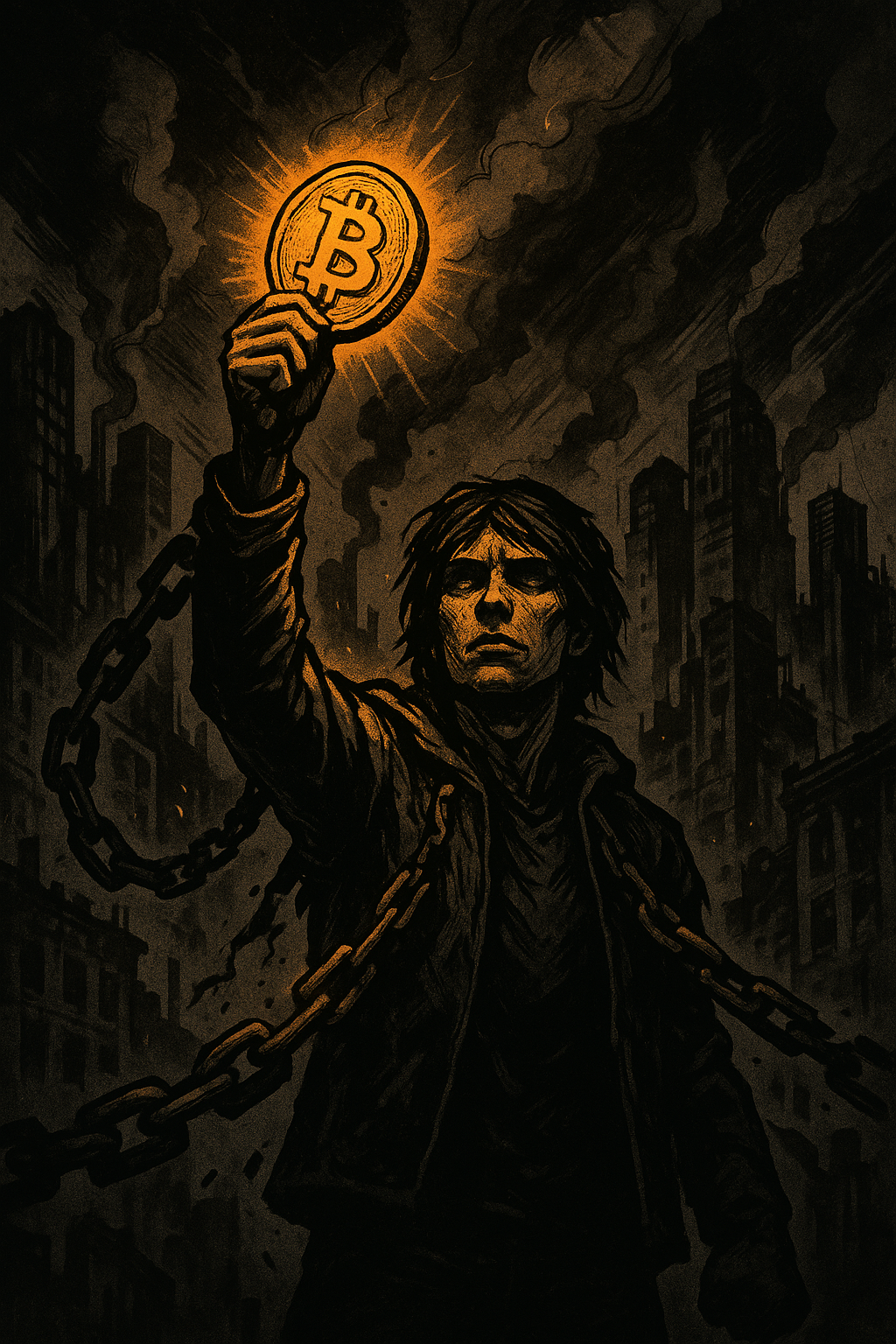
Bitcoin is the ticket to freedom
Fiat isn’t money—it’s control. Governments print it when they want, banks restrict it when they want, and inflation eats away at the value of your labor. In June 2022, U.S. inflation hit 9.1%, the highest in forty years. M2 money supply exploded after 2020. That wasn’t an accident—it was policy. More units chasing the same goods. Your savings quietly stolen. Meanwhile, 1.4 billion people around the world don’t even have access to a bank. For them, the system doesn’t just fail—it doesn’t exist.
And when things get tense, the system shows its teeth. In Canada, the government froze 206 bank accounts during the 2022 trucker protests. In Nigeria, withdrawal limits and a chaotic banknote swap created cash shortages. In Lebanon, deposits were trapped by informal capital controls, leaving people unable to access their own money. That’s not financial freedom—that’s financial slavery.
Bitcoin fixes this. Its supply is capped at 21 million. No government can change it. Transactions are permissionless—no bank can block them. And Bitcoin is portable. With a seed phrase, you can carry your wealth across borders in your head. It’s money you actually own.
This isn’t just theory. In 2021, El Salvador made bitcoin legal tender. The rollout wasn’t perfect, but it proved governments can adopt open money. Remittances are another example: sending $500 costs an average of 4.26% on traditional rails, while Bitcoin and Lightning slash fees and speed up settlement. And when banks freeze or fail, bitcoin is there. Canadians, Nigerians, and Lebanese all learned the same hard truth: if your wealth sits in their system, it’s not really yours.
Today, Bitcoin is used both as a store of value and as money. Scarcity makes it credible for long-term savings. And with the Lightning Network, it’s becoming viable for everyday payments. In August 2023, River reported 6.6 million routed payments on Lightning, averaging about $12 each, with a 99.7% success rate. That’s proof the technology works.
Of course, Bitcoin isn’t magic. Volatility is brutal—50% to 80% drawdowns happen. Custodial risk is real—FTX collapsed with over $1 billion in customer funds missing. And energy consumption is often criticized, though Cambridge provides data showing the trade-offs in security. On top of that, self-custody means responsibility. There are no bailouts if you lose your keys.
So how do you approach it? Start by defining your goal—are you hedging inflation, protecting against censorship, or making fast payments? Buy in boring with dollar-cost averaging and never touch leverage. Move your stack to self-custody with a hardware wallet, and secure your seed phrase with offline backups. Keep only your spending balance on exchanges or hot wallets. If you want to transact, use Lightning. And above all, treat your security setup like the deed to your house.
Here’s the bottom line: fiat is built to control you. Bitcoin is built to free you. But it only works if you take custody. That’s the trade—responsibility in exchange for freedom. I’ll take it.
---
Sources: IMF, World Bank, Federal Reserve, U.S. Bureau of Labor Statistics, Cambridge Centre for Alternative Finance, River, Reuters, BBC.